Residential storm-damage cleanup
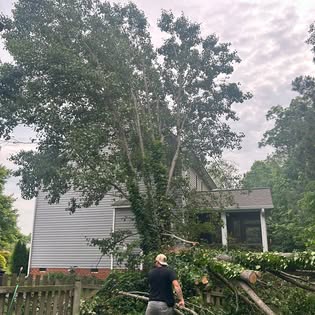
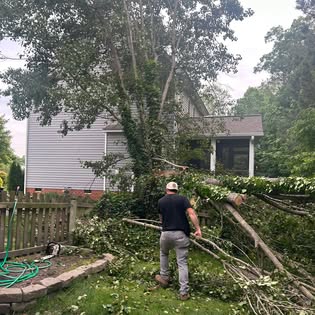
These field photos document the crew clearing downed limbs around a home and restoring access to the work area.
For the majority of homeowners in Richmond, a permit is not required to remove a tree located on private property. However, there are three critical exceptions where you must seek approval before any tree service in Richmond, VA begins work:
Tree removal costs are highly variable because every tree presents unique challenges regarding size and risk. On average, Richmond homeowners can expect to pay:
In the Richmond area, insurance generally views a standing tree as a maintenance responsibility, meaning removal is an out-of-pocket expense. Insurance typically covers removal only when a tree has fallen and damaged a "covered structure." This may include your home, garage, or fence. If a tree falls in the yard without hitting anything, cleanup is usually not covered unless it blocks a driveway or handicap ramp.
A health assessment is a comprehensive diagnostic process where an arborist inspects the tree's leaves, branches, trunk, and roots. We look for specific signs of disease, pest infestations, decay, and structural damage. Based on these findings, we provide targeted recommendations—such as pruning, soil amendments, or pest control—to help preserve the tree's longevity and safety.
Strategic placement is vital for the long-term health of your landscape and can even improve your home's energy efficiency by providing shade. Our arborists analyze your specific soil type, sunlight exposure, and local Richmond climate. We also factor in the tree's mature height and shape. This helps ensure it won't interfere with your home’s structure or underground utilities as it grows.
Regular pruning is essential for maintaining plant vitality and preventing disease.
Construction activities, such as grading or using heavy machinery, can severely damage root systems and compact the soil. Our pre-construction advisement includes creating "tree preservation zones" and using protective fencing to mitigate these risks. This ensures your valuable landscape survives the building process and recovers quickly once the project is finished.
Yes. Trees with dead branches or unstable structures can pose a significant risk to people and property. Liability consulting involves identifying hazards—like root systems threatening a foundation or weakened trunks—and developing a risk management plan. Proactive maintenance, such as cabling or bracing, can often mitigate these risks before they become a legal issue.
We provide free, eco-friendly mulch chips to help Richmond residents improve their soil health and moisture retention. Using recycled tree debris as mulch suppresses weeds and enriches the soil as it naturally decomposes. You can request your delivery by visiting our Free Mulch page and providing your contact information.
Each mini case study is based on field photos and updates Cambium has published. Reviewed by Brian Greene, ISA Certified Arborist. Updated August 15, 2026.
These field photos document the crew clearing downed limbs around a home and restoring access to the work area.
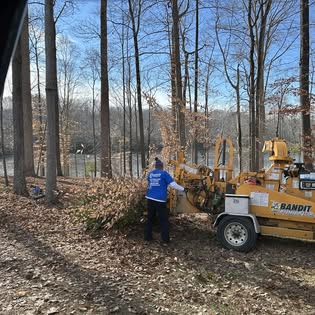
This field photo shows Cambium's chipper equipment staged at the work site while the crew processes brush.
Brian's published update documented an assessment after a vehicle struck pear trees. He noted that root damage did not appear likely to affect the coming year, but the season's pruning was paused.